
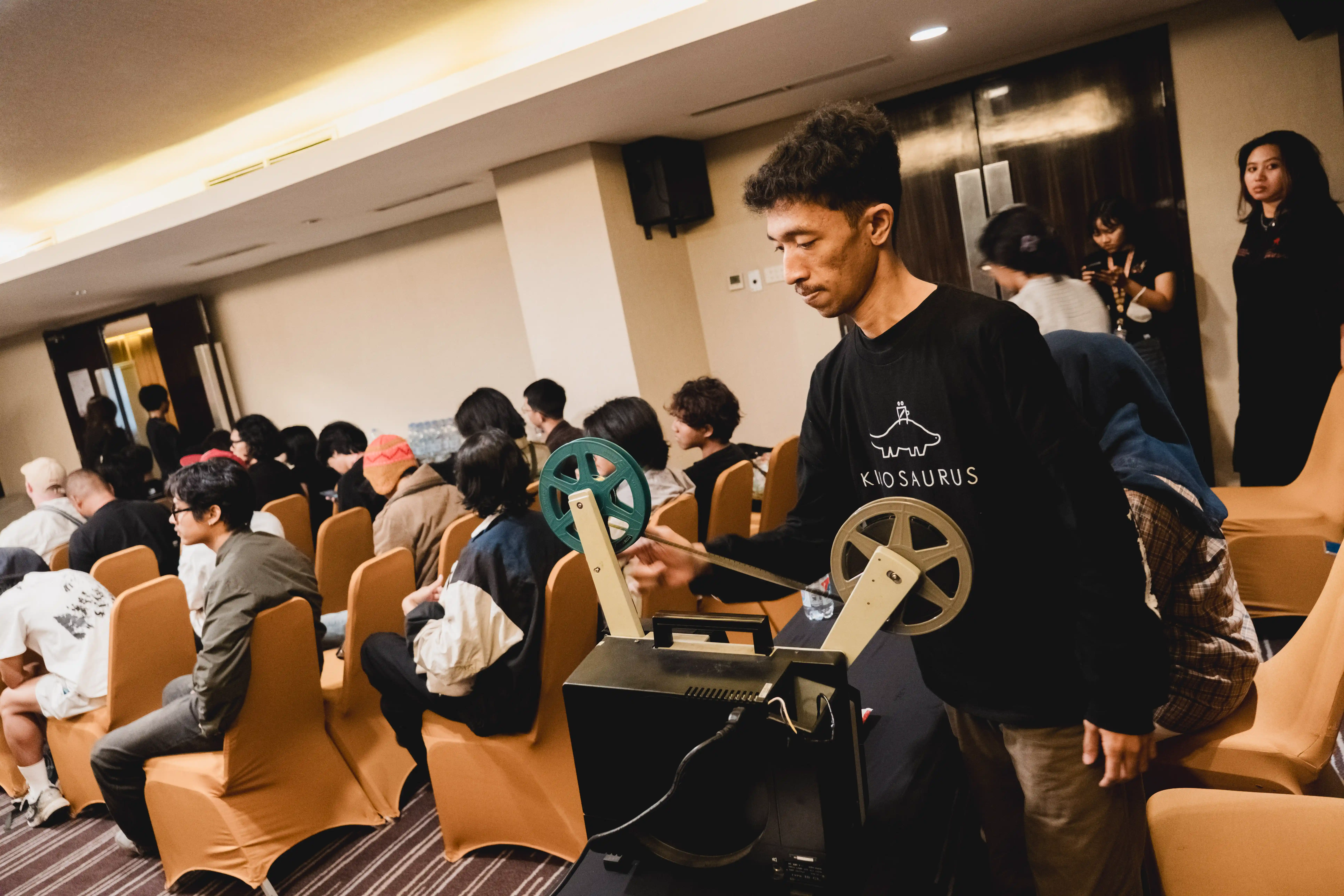
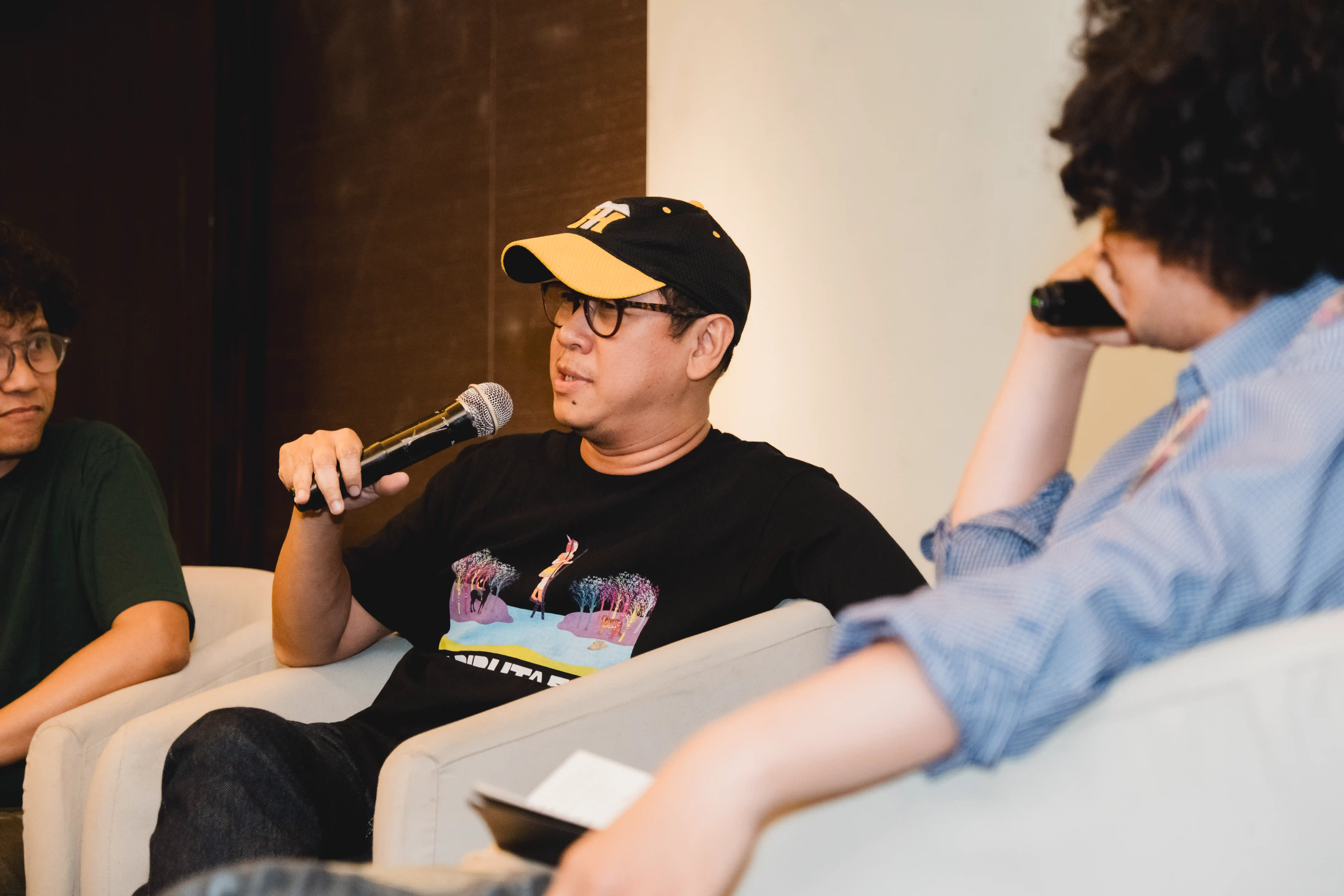
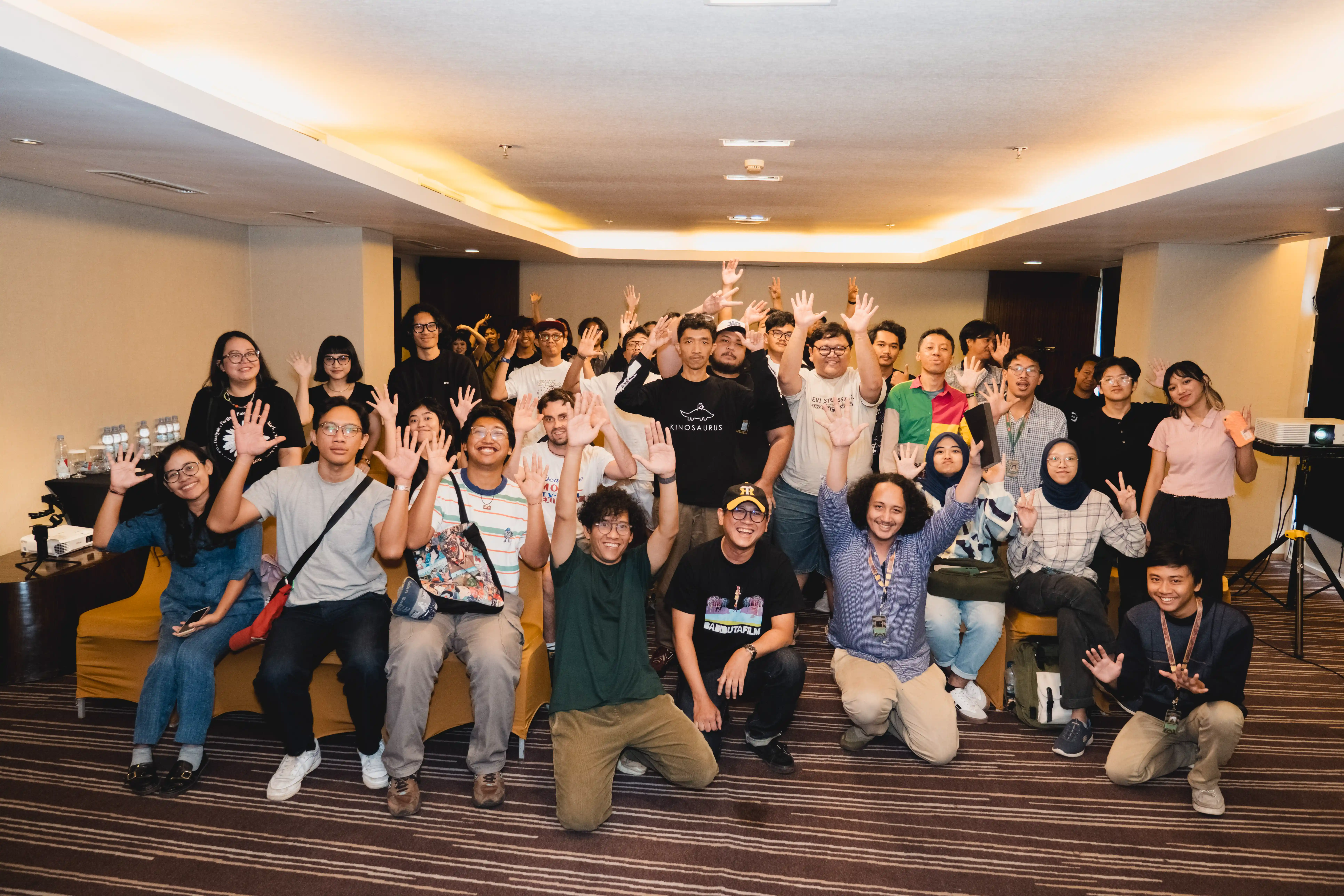
In line with JAFF’s ongoing commitment to initiating archival work, the 20th Jogja-NETPAC Asian Film Festival (JAFF20) collaborated with Lab Laba Laba to present two experimental films using 16mm and Super 8 projectors at Artotel Suites Bianti on 4 December.
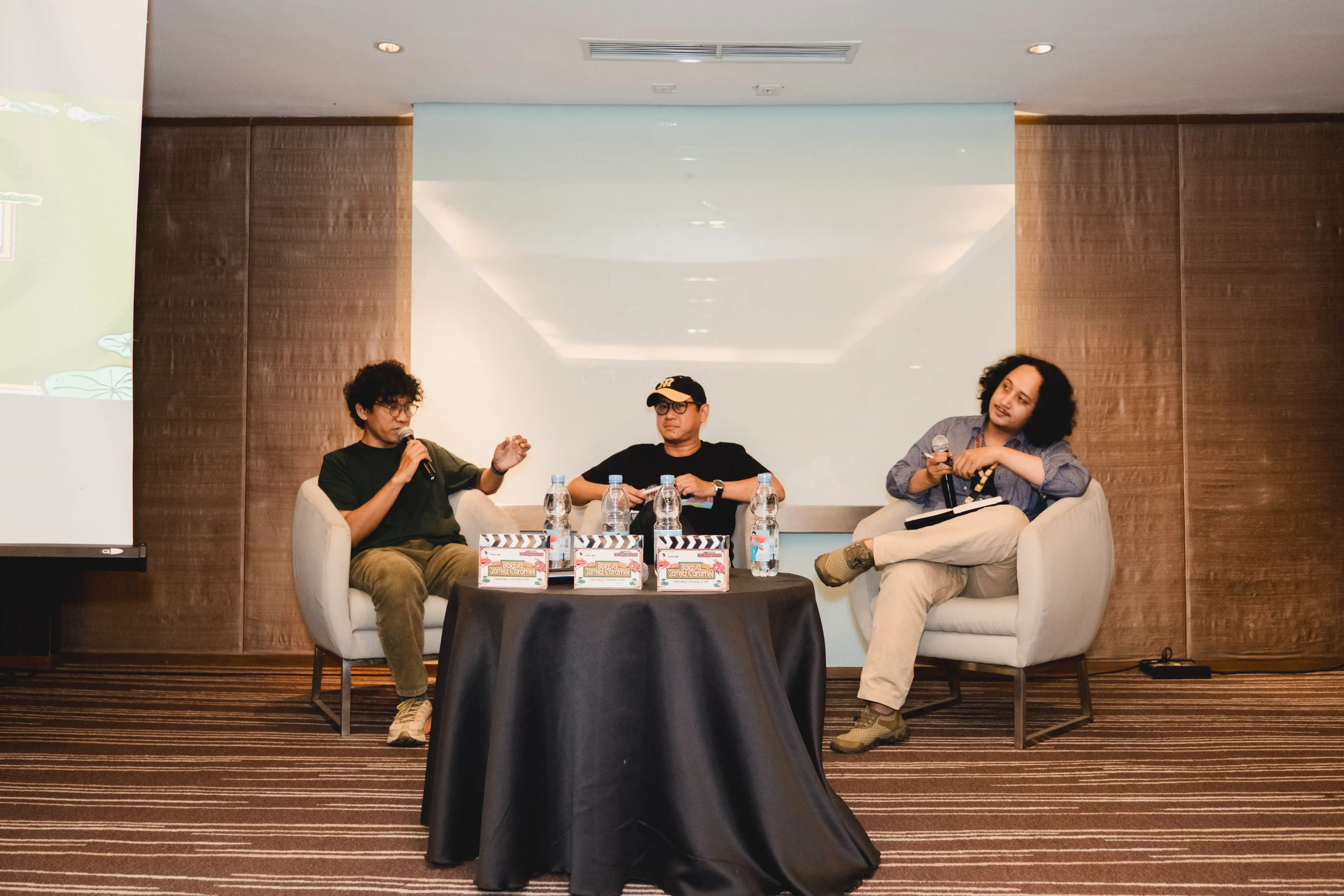
The experience, guided by Lab Laba Laba—an initiative that since 2014 has revived a quiet archival office at the National Film Company (PFN)—highlighted their efforts to restore and preserve Indonesia’s cinematic heritage. Rizki Lazuardi and filmmaker Edwin, the core figures behind the collective, shared insights into their restoration processes.
The first set of restored works screened were Cerita Tentang Eyang Putri Seno Sastroamidjojo (1978) by Marselli Soemarno and From the Cartridges of Seno Gumira Ajidarma (1978) by Seno Gumira Ajidarma. Both filmmakers, alumni of the Jakarta Institute of the Arts (IKJ), were known for their collaborative spirit. The films eventually reached Rizki Lazuardi’s hands, who described the task of deciphering these materials as challenging, enigmatic works that seemed to exist without a defined purpose.
Sourced from scattered archival fragments, the films—when assembled—depict an elderly woman believed to be Eyang Putri Seno Sastroamidjojo, sitting in her room, leisurely reading an adult magazine to the sound of news on an old radio. The juxtaposition evokes both humor and unease. Interspersed with shots of a train station, the film shifts between surreal domestic imagery and a fixed, almost documentary-like setting. Amusingly, Lazuardi shared that even Marselli and Seno themselves had no recollection of ever making such a film.
The second film screened was Dajang Soembi: Perempoean Jang Dikawini Andjing (2004), directed by Edwin. At the time, Edwin and his peers confidently adapted elements of German Expressionism to retell this folk legend, presenting it on 16mm celluloid. “It was made Caligari-style, haha,” Edwin quipped. The production embraced full theatricality—its mise-en-scène meticulously staged, supported by a live piano score that enriched its eerie atmosphere.
Behind the film, however, lies a tragic anecdote. After using second-hand 16mm stock sourced from Ukraine, the team encountered developing errors caused by inexperience in handling the material. Yet the film survived: they projected the damaged footage onto a wall, captured it on mini-DV, and from this improvised method preserved the work.
Following the presentation and discussion, the event concluded with optimism from Lab Laba Laba. Despite limited public interest in film restoration, they reaffirmed their commitment to experimentation, preservation, and keeping Indonesia’s archival memory alive.
Writer: Meutia Rafa Anandita, Gulma Zahra Auradatu
Photos: JAFF Documentation Team