

Message from Festival Curator
Film is a Room with Many Windows
In Pascal Boyer’s Religion Explained, there is one sociological truth that makes sense of why belief systems are developed and then propagated: “Humans seem desperate to join some group and to demonstrate loyalty to it.”
It’s an observation that you can even make in the film festival world. The New Waves, for example. You can’t be a New Wave of one person. Film communities are another example. There’s always got to be a group somewhere. Each group therefore creates its own belief system. Each New Wave, for instance, has its own characteristics and is differentiated from the others. From the French New Wave’s use of actual locations to Dogme 95’s insistence on the avoidance of musical soundtracks, they all express their own identity.
That difference over time tends to become the same but by then, the machinery has taken over and renders a status quo. No one wants to reinvent the wheel. I’d like to believe in the local cliché: “Same, same but different,” since this offers a small measure of hope.
In 2021, documentarist and academic Aryo Danusiri interviewed me for his research on aesthetics of political cinema in Indonesia post-Suharto. Below is an excerpt:
“Aryo Danusiri: As you said, you don’t follow the current issues of human rights (HR) films. Why so? Do you think it is because HR films are too specific in terms of topics and styles?
Philip: Cinema to me is a room with many windows. Political cinema is just one window. I’ve always liked rooms with many windows. It is the object of freedom to be able to have choices. So I like to watch everything from Adam Curtis to Kongdej Jaturanrasmee.
A: When you helmed SIFF (Singapore Int’l Film Festival), how do you program political films for the festival? How about your experience with JAFF?
P: As mentioned, because I view cinema as a room with many windows, I wanted to open all these different windows for the audience. In those days, we were trapped with just one window – Hollywood. Then we started opening other windows – regional cinema of South East Asia with a Retrospective of P Ramlee in 1989, Asian short films in 1989, the films of the Glasnost era in 1990, the Korean wave in 1991 (when Park Kwangsu’s The Black Republic became the first Singapore Silver Screen Awards Best Asian Film winner), China’s Sixth Generation in 1995, the Indonesian new wave in 1998, the Philippines and Malaysian digital new wave in 2001 and more. We also did special programmes on films about Globalisation and documentary and experimental cinema.
For JAFF, I committed one political act. From its beginning in 2006, I took a stance of non-intervention. I wanted to break the grip of the foreign advisor that I’ve seen in so many festivals, when external consultants tell the locals what to do. I wanted to believe in each individual’s strength, so I saw my job as providing information and context. I basically encouraged the festival to be confident in their own strengths. My work in the first decade of JAFF was to show Asian cinema that went under the radar of Western festivals. So I encouraged the team to take risks and show interesting works for the sake of it.
A: How have you considered the youth audience in your programming?
P: Since the beginning. From the start of SIFF in 1987, the whole rock ‘n’ roll framework was something we worked at. One of my happiest moments was when Penelope Spheeris attended the premiere of her Ozzy Osbourne documentary, Decline of the Western Civilisation III (1998). In those days, SIFF took place in April that normally clashed with the Islamic Ramadan. I remember that all the Malay metalheads came for that Sold-Out screening and broke their fast during the film.
We constantly looked for trends. For example, the first Retrospective of Apichatpong Weerasethakul in the world took place at SIFF 2001. If you look at all the digital film festivals today, think about this. We launched 8arts.com, the first Asian digital film website in 2000, and then the Asian Digital Film Awards in 2001. But it was too new then, so a lack of funds meant that we had to shut them by 2003.
A: Some filmmakers feel that films look too similar to each other nowadays. And they suspect that is because of the globalisation of film mentorship. What do you think?
P: It’s largely quite true. There are two principal factors here. One, follow the money trail. In many such films, when you see where the production funding comes from, you understand why a film is shaped that way. Second, in most cases, these foreign producers/mentors do not believe in the principle of non-intervention, so they will pressure the local filmmaker to edit or market the film in a certain way.
But what is also true is that sometimes it’s the local filmmaker who doesn’t have the confidence. I remember one who had a very famous European mentor, and the mentor told him that his film was good and already finished. The filmmaker wanted to keep doing more post-production. He couldn’t believe that it was already good in itself and wanted to be validated by a European festival, even after I got him three competition slots in three Asian festivals. He turned them all down, but he also didn’t get selected by Berlin.
A: In your opinion, what are the current dilemmas and future challenges of curating films for film festivals? Do you think that the global-local tension is still relevant?
P: The main challenge is the age-old divide of art vs. the market. I know of Asian festivals that predicate their entire selection on what Asian films the Western festivals select. Because it’s branding at work. They find it easier to sell tickets for films that have foreign festival validation.
The intrinsic challenge of a film festival today is this: Do you and can you TRUST your audience to choose for themselves? The SIFF did not have a ready-made audience. It was trial and error all the way. But I think we made good use of the available funds we had. In short, we did not spend money wastefully. We took the Godardian path. We had $1 so we made a $1 film festival.
A: The pandemic has forced film festivals to be online. How do you see the future of film festivals amid the rapid virtualisation of human activities?
P: It’s not the future we want. You also have to remember something very crucial. Film festivals were the Internet before the Internet was born. How else was such a global community in touch? And this is a key word – Touch. The virtual cannot exist without touch, at least, not in a meaningful way.
A: How do you see the work to develop film festivals, especially critical thinking/political festivals, for youth?
P: Traditionally, the main obstacle to developing film festivals has been film censorship. Ironically, this obstacle still exists, but not on Netflix and other streaming giants. Today, you can easily see nudity on your TV at home!! So why did we need film censorship? The answer is – We did NOT need it. It was just a tool of power and a mechanism of fear. Today, it is the Market that reigns supreme, even over politics. That’s why filmmakers still bend over for it. For them to decide whether to premiere at an Asian or European festival, their foreign sales agent would point out that the European market is more profitable. Even though China briefly became the number one global box office at the end of 2020.
For festivals to develop an open mind in Asia, we have to learn to be true to ourselves. Find the middle path. Find your balance. Freedom awaits…”
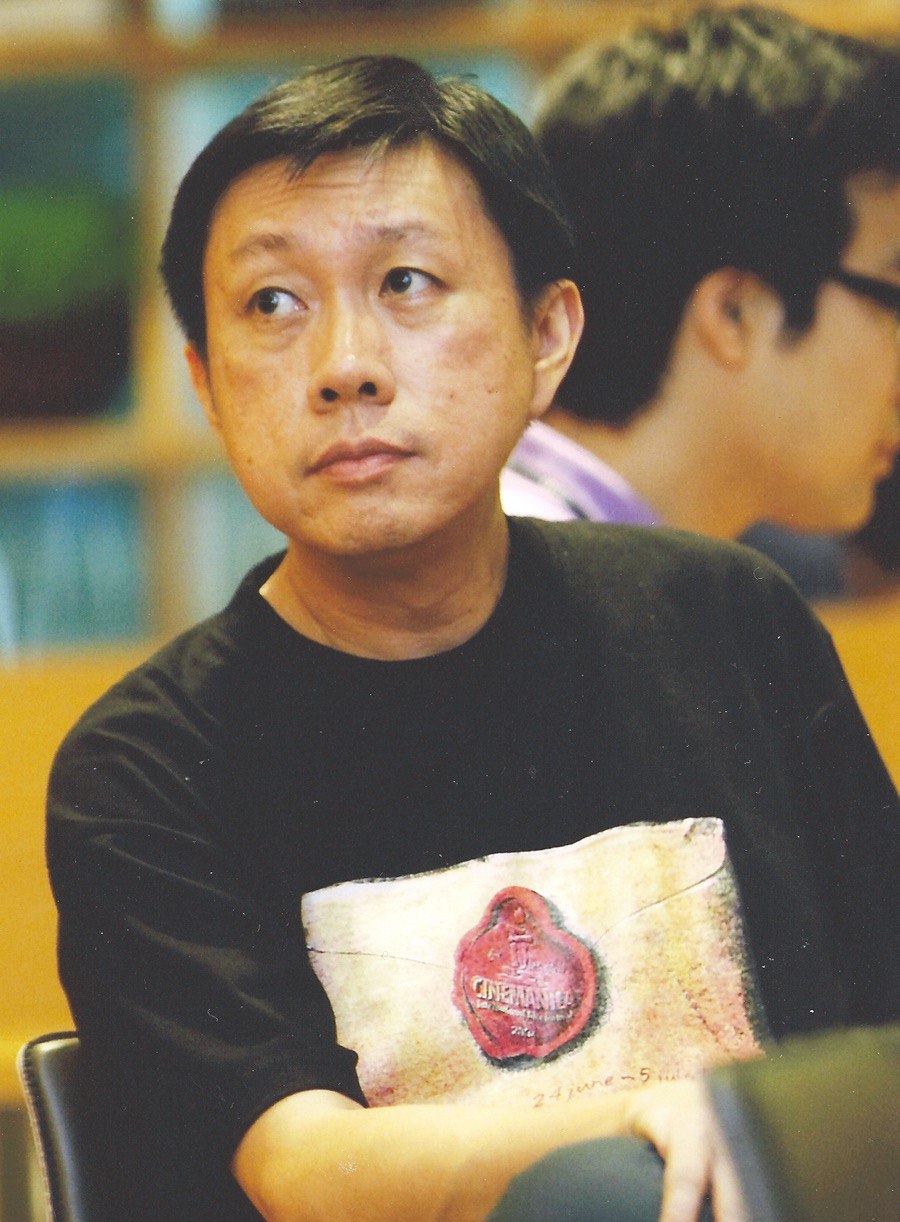
Philip Cheah
Festival Curator Jogja-NETPAC Asian Film Festival